

Take the First Step Toward Cybersecurity Excellence
Why Nexusguard?

Over 15 Years

Trusted by 100+

Protecting 50,000

40+



Learn More About Nexusguard Academy Courses
2025 DDoS Threat Analysis and Industry Perspectives

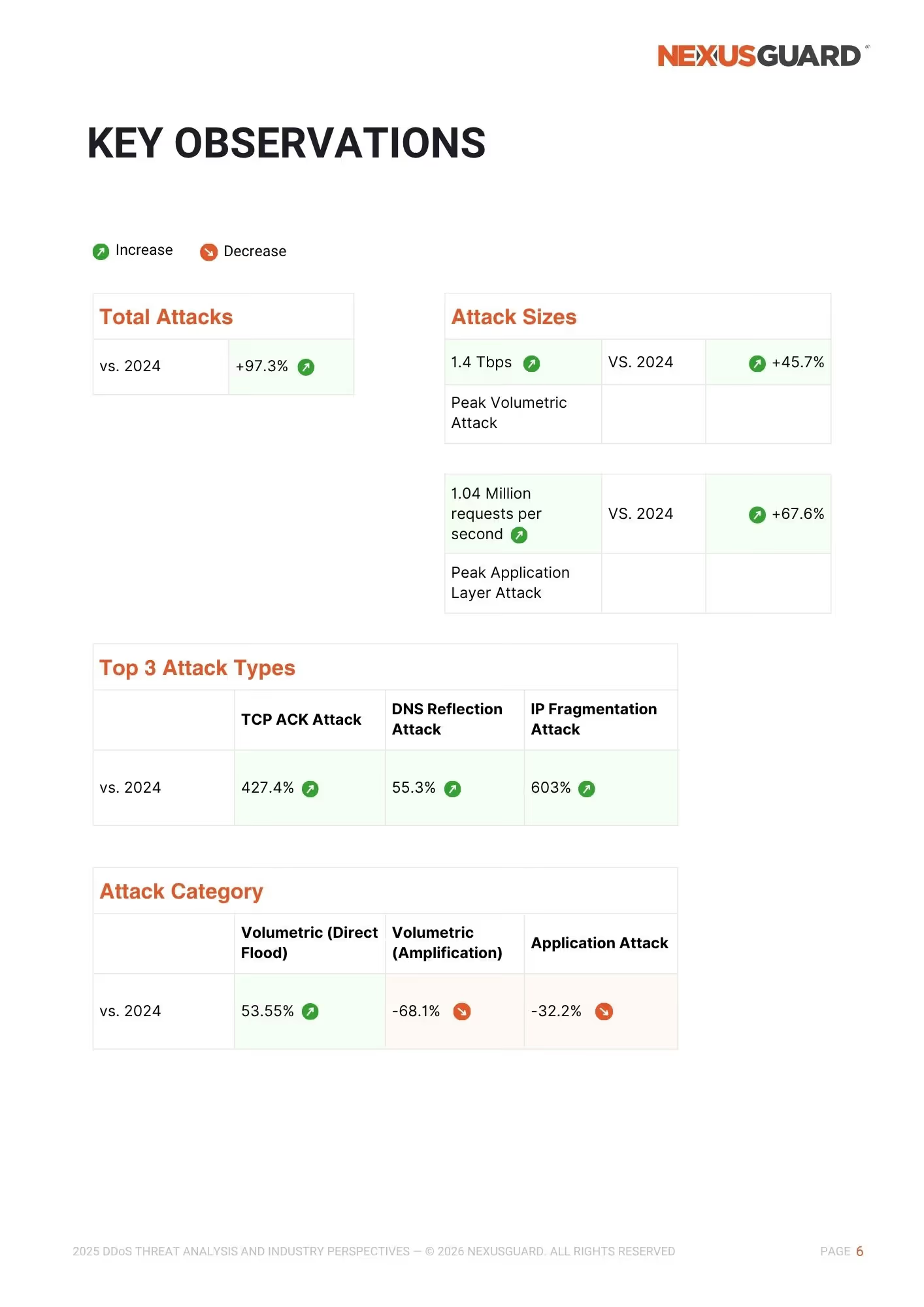
Defending against DDoS is no longer just about surviving the biggest attacks—it’s about preserving service quality, reducing hidden complexities, and ensuring operational accountability . Based on the mitigation of over 686,000 attacks globally , the Nexusguard 2025 DDoS Threat Analysis and Industry Perspectives provides the critical data you need to shift your strategy from simple capacity-building to true local-first resilience .
The 2025 Threat Landscape at a Glance
- 97.3%: Year-over-year increase in total attacks.
- 1.40 Tbps: Peak volumetric attack bandwidth.
- 603%: Explosion in stealthy IP Fragmentation attacks.
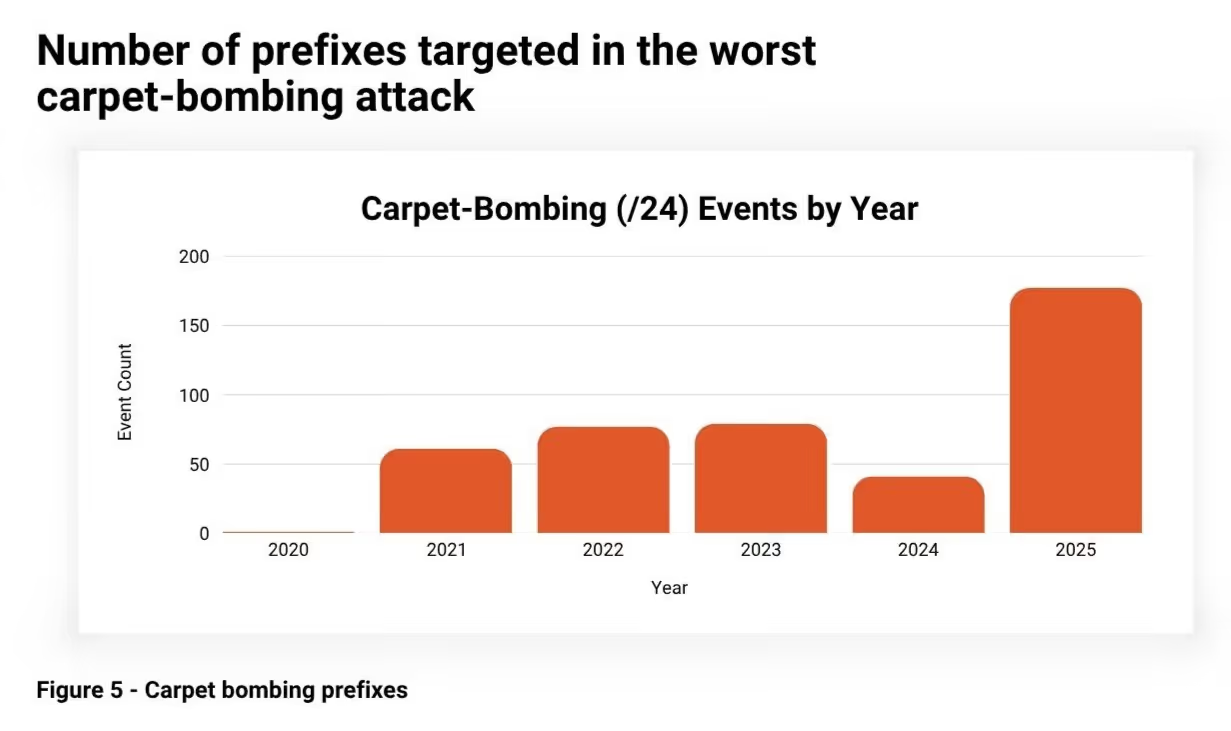
- 177: IP prefixes hit simultaneously in the year's worst carpet-bombing event.

Top Findings & Visual Insights
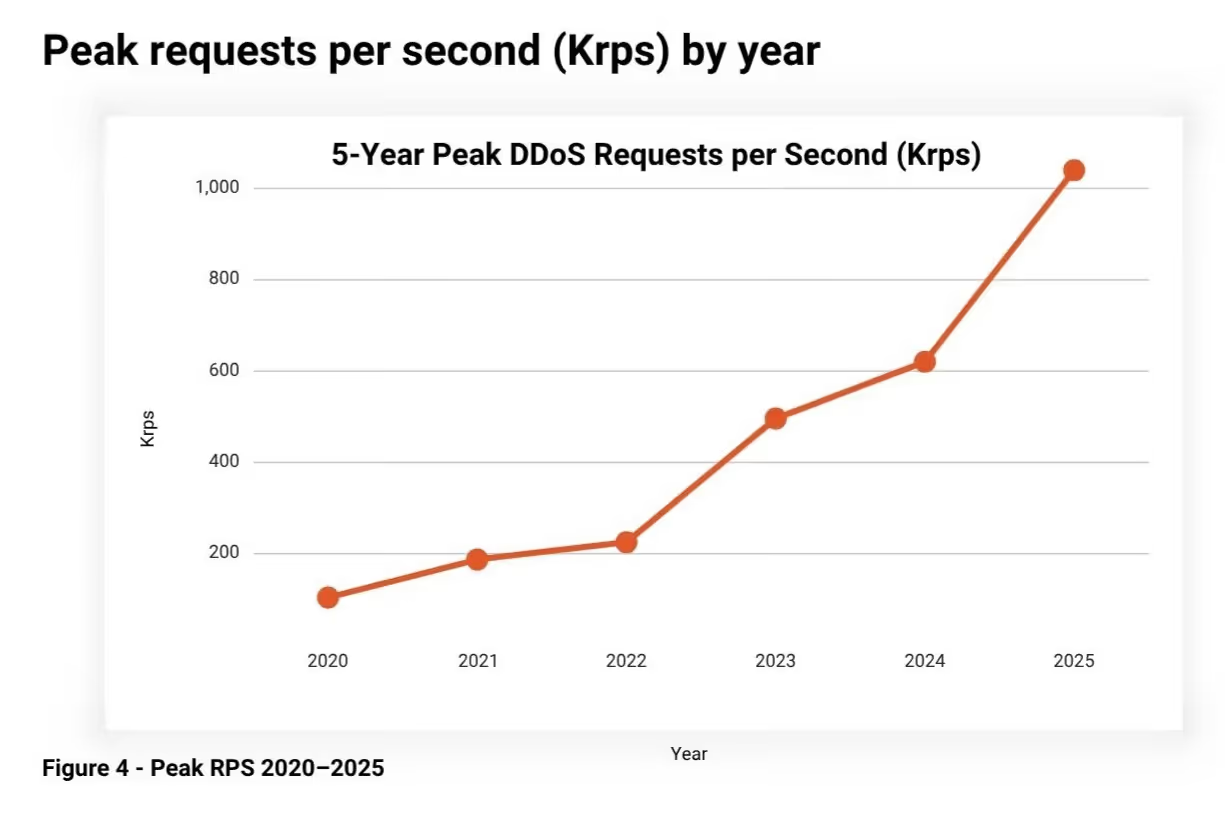
Scale is Routine, But Complexity is the Threat While total attacks surged, threat actors are evolving beyond simple brute force. Peak application-layer attacks reached 1.04 million HTTP/2 requests per second, as attackers blend tactics across layers to evade standard filters.
The Resurgence of Carpet-Bombing Attackers are bypassing main aggregation points by spreading small, seemingly benign flows across hundreds of IP prefixes. The most severe carpet-bombing event targeted 177 /24 prefixes simultaneously—up from just 41 prefixes the year prior.
Industry and Market Perspectives
DDoS protection is no longer being judged only by maximum mitigation capacity or the size of a provider’s global network. Buying decisions are increasingly shaped by accountability, transparency, compliance alignment, jurisdictional trust, predictable latency, and proximity of support. As enterprises and service providers reassess centralized models, the market is shifting toward solutions that offer clearer operational control and stronger alignment with local requirements. In this environment, resilience is becoming not only a technical outcome, but also a business and architectural choice.

As fragmentation pressures continue to grow, DDoS architecture is becoming a strategic decision rather than only a technical one. Data sovereignty, latency sensitivity, regulatory divergence, geopolitical risk, and operational control are making local-first and hybrid models increasingly relevant, while a purely global-first approach may be less aligned in environments where jurisdictional control and service quality matter most. Resilience is no longer defined only by maximum mitigation capacity, but also by the ability to keep traffic closer to users, reduce hidden disruption, and maintain control during mitigation.

Why are traditional defenses failing to protect the business?
- The Blast Radius of Hyperscaler Dependence: Relying entirely on centralized global cloud providers means a localized attack can trigger a failure that cascades across regions.
- Eroded Customer Trust: Modern attacks rarely cause total website destruction; instead, they cause dropped multiplayer gaming sessions, failed mobile payments, and delayed flights. To the user, degraded performance is an outage.
- Regulatory & Data Sovereignty Exposure: When a volumetric attack forces your traffic to be backhauled across international borders for mitigation, you risk violating strict data-residency laws.
The report outlines how leaders must adapt for 2026:
- Shift from Capacity to Accountability Metrics: Stop evaluating defenses based solely on "maximum Tbps mitigated. " Begin tracking user-centric metrics like time to detection, latency, and post-incident root-cause clarity.
- Design Local-First Resilience: Do not inherit resilience from a single provider. Build regional scrubbing capacity and establish failover procedures that keep critical traffic within your jurisdictional boundaries.
- Prepare for Multi-Vector Stealth Campaigns: Implement detection capable of identifying distributed, low-rate floods across multiple prefixes, combining on-premises filtering with cloud defences.
Go beyond the summary.
Download the full analysis to gain the strategic edge needed to protect your infrastructure, giving you exclusive access to:
- Detailed Regional Breakdowns: Telemetry on peak bandwidth and attack distributions across APAC, EMEA, LATAM, and the Americas to benchmark your specific region.
- Real-World Disruption Case Studies: Deep-dive analyses on how stealthy DDoS campaigns successfully disrupted major global brands in 2025, including Japan Airlines, NTT Docomo, and international rail operators.
- The Architecture Choice Framework: Exclusive radar charts comparing the latency, compliance, and cost-efficiency tradeoffs between Global-First Hyperscaler models and Local-First Hybrid models .
Download the Full 2025 Report Now
Protect Your Infrastructure Today


Proteja Sua Infraestrutura Hoje